




























Global Good Agricultural Practices (GGAP)
1.What is Global Good Agricultural Practice (GGAP) certification
GLOBALG.A.P. (Global Good Agricultural Practice, GGAP) is a globally applicable certification standard for agricultural production initiated by European retailers. It focuses on regulating the whole process of planting and breeding to ensure food safety, environmental protection, employee health and animal welfare. As an important access credential for agricultural products exported to the European Union and major international supermarkets, it permits the compliant use of agricultural inputs and emphasizes full traceability and process control.
2.Legal and regulatory system
GlobalG.A.P. (GGAP) is not directly mandatory under national legislation, but a voluntary, market-oriented and international agricultural standard system based on ISO/IEC 17065. Its legal and compliance binding force mainly derives from international standard rules, certification contracts, mandatory requirements of buyers, as well as its alignment with national food safety laws.
3.Which Enterprises Are Eligible for GlobalG.A.P. (GGAP) Certification?
Production Entities
Independent farms / planting / breeding enterprises (legal persons / natural persons): Large-scale production entities that bear legal responsibility for their products.
Agricultural production organizations: Collective producers such as cooperatives, alliances, and “company + farmer” models.
Family farms / large-scale specialized farmers: Large-scale farmers with standardized management capacity.
Supply Chain and Processing Entities
Agricultural product traders / exporters: Entities required to prove compliant and traceable supply sources.
Primary processing plants / post-harvest handling enterprises: Engaged in washing, grading, packaging and cold storage (subject to PHA / CoC certification).
Feed mills / plant propagation material suppliers: Corresponding to the CFM / Plant Propagation Material modules.
4.What Products Are Eligible for GlobalG.A.P. (GGAP) Certification?
GlobalG.A.P. (GGAP) certification covers more than 700 types of primary agricultural and agri-related products, with Integrated Farm Assurance (IFA) as its core scope, specifically including crop production, livestock farming, aquaculture, and beekeeping. Examples include combinable crops, fruits and vegetables, cattle and sheep, pigs, poultry, and other products.
5.GlobalG.A.P. (GGAP) Certification Levels and Requirements
GlobalG.A.P. (GGAP) certification takes IFA (Integrated Farm Assurance) as its core, adopting a three-level control point classification and two main certification levels (Basic / Certified). It is also supported by the entry-level PFA scheme and various add-on modules. The complete certification levels and compliance requirements are as follows.
I. Control Point Classification
All standards (IFA, CFM, PHA, CoC) divide requirements into three categories, which serve as the core basis for judging compliance under GLOBALG.A.P.
1. Major Musts (Level 1 / Critical Control Points)
Nature: Mandatory, “one-vote veto” items directly affecting food safety, traceability, environmental protection, and health and safety.Compliance requirement: Must be 100% satisfied; failure to meet any single item will result in audit failure.
2. Minor Musts (Level 2 / Important Control Points)
Nature: Mandatory, key management requirements affecting system integrity and ongoing compliance.Compliance requirement: At least 95% compliance (non-conformities ≤ 5% are permitted and must be corrected within a specified period).
3. Recommendations (Level 3 / Suggested Items)
Nature: Non-mandatory best practices for continuous improvement.Compliance requirement: No mandatory compliance ratio; adoption is encouraged.
II. Core Certification Levels (IFA System)
1. IFA Basic Level (formerly GAP)
Positioning: Entry-level standard for global use, meeting basic procurement requirements of most international supermarkets.Application: Export-oriented large-scale farms, cooperatives, and multi-site enterprises.
Compliance requirements:
Major Musts: 100% compliance
Minor Musts: ≥ 95% compliance
Recommendations: Encouraged to be adopted
Certificate: GLOBALG.A.P. IFA Basic Level certificate issued; GGAP logo may be used.
2. IFA Certified Level (formerly GAP+ / EUREPGAP)
Positioning: The highest level, equivalent to the original EUREPGAP, meeting mandatory requirements of high-end markets and top retailers (e.g., Tesco, Carrefour) in the EU, UK, Japan, etc.Application: Enterprises focusing on the EU / high-end supermarkets and pursuing maximum compliance and brand premium.
Compliance requirements:
Major Musts: 100% compliance
Minor Musts: ≥ 95% compliance (usually 100% for fruits and vegetables)
Recommendations: Encouraged to be adopted
Add-ons: Some retailers require additional modules such as GRASP (Social Compliance) and Animal Welfare.
Certificate: GLOBALG.A.P. IFA Certified Level certificate issued; the GLOBALG.A.P. Certified logo may be used.
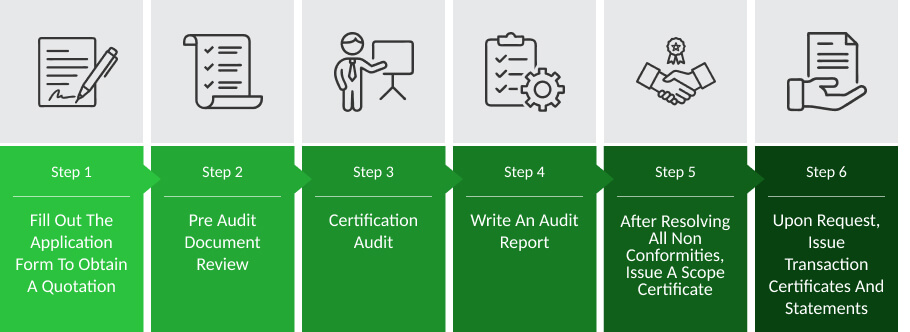
6.GlobalG.A.P. (GGAP) Certification Process
7.How to Prepare for GlobalG.A.P. (GGAP) Certification
I. Preparatory Stage (1–2 weeks)
II. System Establishment (Core phase, 2–4 weeks)
III. Input Management & Control
IV. Occupational Health and Safety (usually audited together with GRASP)
V. Internal Pre-assessment (critical step)
VI. Formal Audit Process
8.How Long Does It Take to Obtain GlobalG.A.P. (GGAP) Certification Results?
From submitting the application and completing GGN registration to receiving the GlobalG.A.P. certification result / certificate, the overall cycle normally takes 3 to 6 months, depending mainly on your preparation status and whether corrective actions are required.
9.Use of GlobalG.A.P. (GGAP) Certificate and Logo
Strict rules apply to the use of GlobalG.A.P. (GGAP) certificates and logos. The core principles are: use only in B2B contexts, binding with GGN required, and strictly prohibited on final consumer packaging.
I. Basic Certificate Information
Certificate types: Integrated Farm Assurance (IFA), Chain of Custody (CoC), Produce Handling Assurance (PHA), etc.
Validity period: 1 year, with annual surveillance audits required; re-certification shall be initiated 3–4 months before expiration.
Core identifier: GGN (GlobalG.A.P. Number), formatted as a prefix + 13-digit number (e.g. GGN 1234567891011), serving as the unique identification and verification reference.
Certificate content: certification scope (products / fields / sites), level (Basic / Certified), validity period, certification body, and GGN.
II. Logo Types and Specifications
1. Official logos (available only from GlobalG.A.P. via documents.globalgap.org)
Wordmark: GLOBALG.A.P. (all uppercase, no spacing, full stop required)
Symbol mark: green G-shaped icon
Combined mark: G-shaped icon + GLOBALG.A.P. text (most commonly used)
2. Core usage rules (enforced since June 2023)
Prerequisite for use: valid certificate, products within the certified scope, and registered production / handling sites.
Binding requirement: the corresponding GGN must be displayed together with the logo (mandatory for non-members; recommended for members).
Scenario restrictions (critical):
Permitted: B2B documents (contracts / invoices / quotations), corporate B2B website pages, exhibition panels, pallets / transit containers (not for retail sale), internal traceability labels.
Prohibited: direct printing on edible produce surfaces, final consumer packaging, and retail point-of-sale product displays.
QR code logo: may be used on products / consumer packaging and at point of sale, linked to the certification verification page.
Format requirements: no alteration to colors, proportions or text; minimum size to ensure clear legibility.
10.Validity Period of GlobalG.A.P. Certification
All types of GlobalG.A.P. (GGAP) certificates (including IFA, CoC, PHA, etc.) have a standard validity period of 1 year (12 months) starting from the date of issuance.
Validity period: 12 months. Re-certification must be completed annually to maintain certification status.
Annual surveillance: One surveillance audit is required each year after certification to ensure ongoing compliance.
Re-certification timing: It is recommended to start the re-certification process 3–4 months before expiration to avoid service disruption due to certificate expiry.
Expired certificate: Certificates become invalid immediately upon expiration. The certificate and logo may no longer be used, and a full initial certification process will be required again.
11.Why Should Enterprises Apply for GlobalG.A.P. Certification?
I. Essential Market Access
II. Enhanced Product Competitiveness and Premium Pricing
III. Reduced Food Safety and Compliance Risks
IV. Upgraded Internal Management, Cost Reduction and Efficiency Improvement
V. Policy and Project Support
VI. Brand Image and Long-term Development
12.GlobalG.A.P. (GGAP) Certification Fees
The cost of GlobalG.A.P. (GGAP) certification depends on various factors, including the standards the enterprise applies for, the type of operations, the product varieties to be certified, and the complexity of the operation. We recommend that you complete our application form to receive an accurate quotation.